

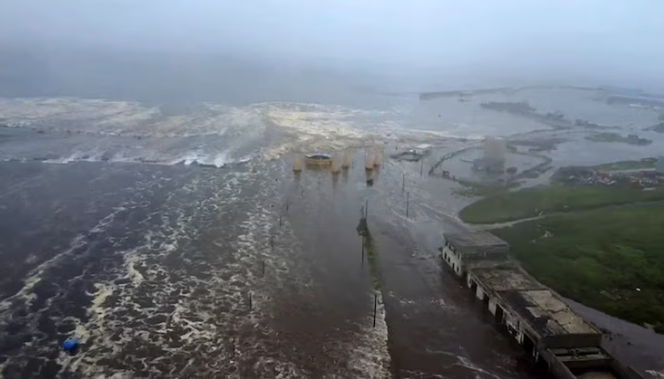

A massive 8.8-magnitude earthquake struck off the Kamchatka Peninsula in eastern Russia on Tuesday, triggering tsunami alerts across the Pacific—including Hawaii, the U.S. West Coast, Alaska, and numerous other regions worldwide.
Tsunami waves began hitting Hawaii on Tuesday evening, prompting evacuations across the islands. Waves were also detected in Monterey and San Francisco, California, and as far as Japan and South America, according to officials.
Hawaii: Waves Hit Oahu, Advisory Replaces Warning
This Article Includes
The Pacific Tsunami Warning Center initially issued a tsunami warning for Hawaii, later downgrading it to an advisory after waves arrived. Officials reported waves of up to 4 feet off Oahu, while other areas, including the Big Island, saw minimal impacts. Still, authorities warned residents not to return to evacuated areas immediately, citing the risk of larger follow-up waves.
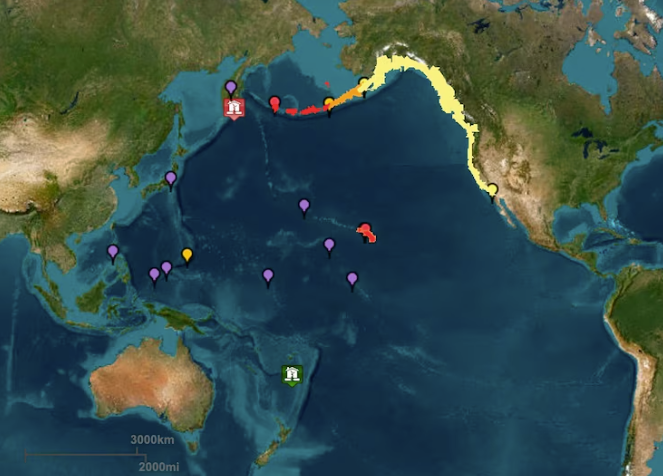
Governor Josh Green said authorities expected a significant wave — roughly 6 feet peak to trough — and warned that even a 3-foot rise could have destructive consequences.
“It is not just a 3-foot wave, it is a forceful wall of water,” he said.
Evacuation sirens sounded throughout Hawaii every hour leading up to the expected wave arrival, urging residents in low-lying areas to seek higher ground or shelter on the upper floors of buildings. Flights were temporarily halted, with Hawaiian Airlines and Alaska Airlines announcing plans to resume operations on Wednesday morning.
Mainland U.S. Coastlines: Alerts and Recorded Waves
Tsunami alerts extended to the West Coast, including parts of California, Oregon, and Washington. By early Wednesday morning, tsunami waves had been recorded in Monterey and San Francisco, with continuing advisories in effect as experts monitored additional wave activity.
A tsunami warning was issued for Northern California from Cape Mendocino to the Oregon border, while other areas remained under advisory status.
Tsunami Reaches Globally: Japan, South America, and the Pacific Islands
The earthquake and tsunami triggered global concern:
-
Japan issued a tsunami warning for its northern regions, prompting the evacuation of 2 million people. Authorities predicted 1-meter (3-foot) waves hitting Hokkaido, with more waves expected throughout the day in Honshu and Kyushu.
-
In Russia’s Kamchatka region, about 3,000 residents were evacuated from coastal areas affected by the quake and subsequent waves.
-
Several Central and South American countries, including Chile, Peru, Ecuador, Costa Rica, Mexico, Guatemala, El Salvador, and Colombia, also issued tsunami alerts.
-
Pacific islands and territories — such as Guam, Samoa, Fiji, French Polynesia, Solomon Islands, Marshall Islands, Australia, the Philippines, and New Zealand — issued warnings or advisories. Some advised citizens to stay off beaches and avoid river mouths due to strong surges.
-
U.S. territories including Midway Island, Johnston Atoll, Palmyra Island, and other outlying islands were also placed under tsunami alert.
Magnitude and Aftershocks
The U.S. Geological Survey (USGS) upgraded the quake’s strength to 8.8, making it one of the most powerful earthquakes ever recorded by the agency. It occurred about 85 miles off Russia’s coast, at a depth of roughly 12 miles. Aftershocks measuring 6.3 and 6.9 followed shortly after.
Federal Response and Ongoing Threats
President Donald Trump posted a message on social media urging people to “STAY STRONG AND STAY SAFE” and monitor official updates on tsunami.gov.
Officials continue to warn that tsunami danger can persist for hours, as subsequent waves may be stronger than the first. Residents in affected zones are advised to remain alert and follow evacuation orders until authorities officially lift warnings.
“We need people to stay calm but also to act accordingly,” said Honolulu Mayor Rick Blangiardi, encouraging evacuation from low-lying zones amid heavy traffic.
Authorities emphasize that tsunami waves are not traditional waves—they are fast-moving, forceful walls of water capable of widespread destruction.