
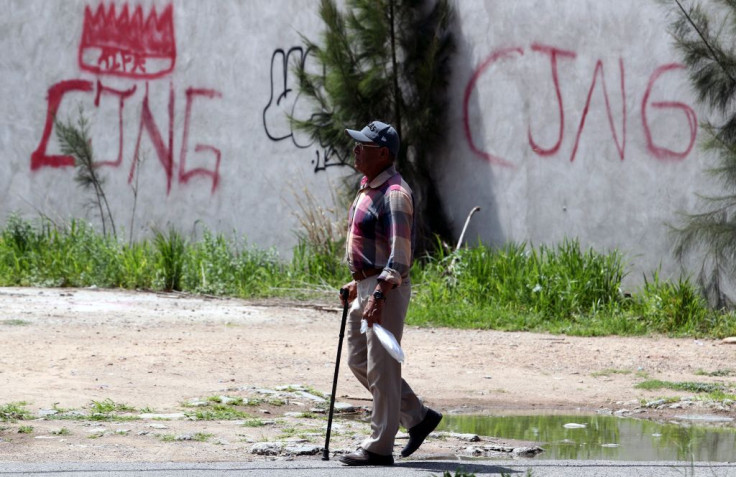
A decade-long investigation has uncovered the extent of the Jalisco New Generation Cartel (CJNG)‘s financial network, revealing that while authorities in the U.S. and Mexico have identified nearly 250 individuals and entities tied to the cartel, fewer than 20% have been detained or faced prosecution.
Drawing from U.S. Treasury Department records—specifically from the Office of Foreign Assets Control (OFAC)—and intelligence from Mexico’s Secretariat of National Defense (Sedena), the report identifies 245 operatives and businesses linked to the cartel’s money laundering operations. These include 87 individuals and 125 companies sanctioned by OFAC since 2015, along with 33 people flagged by Mexican military authorities.
Despite these actions, the vast majority—over 80%—remain free, many still running businesses or working within financial or public institutions.
A Financial Network Largely Intact
This Article Includes
One of the most revealing aspects of the investigation centers on how the CJNG’s financial infrastructure remains intact—largely due to legal and procedural barriers in Mexico.
Among the notable cases:
-
Karely Lizbeth Ramírez Bañales, partner of high-ranking CJNG leader Audias Flores Silva (“El Jardinero”), had two of her bank accounts unfrozen by a Mexican court in February 2025. The judge cited procedural flaws, emphasizing that the DEA had only requested information, not a direct asset freeze.
-
César Enrique Díaz de León, aka “El Lobito”, was a plaza boss in Colima linked to CJNG accounts flagged during Mexico’s 2020 “Agave Azul” anti-money laundering operation. Despite this, he won a court ruling that lifted the freeze on his accounts and removed his name from the blacklist.
Legal Loopholes and Court Limitations
Investigators point to Mexican court rulings as a significant obstacle. Since 2018, a Supreme Court decision has restricted Mexico’s Financial Intelligence Unit (UIF) from acting solely on international asset-freeze requests. A 2024 ruling further tightened these rules, requiring even more formal and detailed legal processes to take action against suspects listed by bodies like OFAC.
“OFAC designations have done little in Mexico,” the report notes.
“The financial arm of the CJNG remains virtually untouched,” it concludes.
U.S. Efforts and Sanctions
In a separate development on June 19, the U.S. imposed sanctions on five CJNG leaders, including Ruben “El Mencho” Oseguera Cervantes, the cartel’s top commander. These sanctions aim to block any assets held in the U.S., whether personal or tied to companies.
The U.S. government has also offered a $15 million reward for information leading to El Mencho’s capture.
Despite coordinated efforts and years of intelligence gathering, the investigation reveals a troubling truth: CJNG’s financial ecosystem remains largely intact, highlighting the complex legal and political challenges in dismantling the cartel’s economic power.